
herc jobs logo

JOB SEEKER LOGIN HERCONNECT (MEMBER LOGIN)

Menu
  • Job Seeker Resources
    • Search Jobs
    • Create an Account
    • Career Advice
    • Ebooks
    • Virtual Career Fairs
    • Webinars
    • Dual Careers Resources
    • Inclusive Career Hubs
  • Employer Resources
    • Become a Member
    • Products and Rates
    • Post a Job
    • Regional HERCs
    • Toolkits
  • About Us
Menu
  • Job Seeker Resources
    • Search Jobs
    • Create an Account
    • Career Advice
    • Ebooks
    • Virtual Career Fairs
    • Webinars
    • Dual Careers Resources
    • Inclusive Career Hubs
  • Employer Resources
    • Become a Member
    • Products and Rates
    • Post a Job
    • Regional HERCs
    • Toolkits
  • About Us


Archives for December 2025

The Rising Demand for IT Talent in Higher Education

December 4, 2025 by Marketing Director

Higher ed tech professionals discussin a tech solution

In today’s colleges and universities, technology has moved from the background to the forefront of institutional strategy. From cybersecurity and cloud integration to data analytics and digital learning environments, higher education now depends on advanced information technology systems. Yet many campuses face a growing challenge: a shortage of skilled tech professionals to sustain and advance this transformation.

As institutions strengthen digital infrastructure and expand online offerings, the demand for tech talent has surged. For professionals seeking meaningful, stable, and mission-driven work, academia offers a compelling—and often overlooked—career path.

The Changing Technology Landscape in Higher Education

Technology in higher education is evolving rapidly, reshaping nearly every aspect of campus operations. The pandemic accelerated digital transformation, driving institutions to adopt new tools for online instruction, hybrid classrooms, and virtual collaboration. Today, colleges are investing long-term in systems that make education more flexible, accessible, and data-informed.

Digital transformation is redefining how campuses operate. Core systems for student records, human resources, and financial management are moving to the cloud. At the same time, integrated analytics dashboards help leaders track student success, streamline operations, and make data-driven decisions.

Cybersecurity has become equally critical. As cyber threats grow more sophisticated, institutions need IT professionals who can safeguard sensitive student and research data, maintain regulatory compliance, and develop proactive security strategies that protect both infrastructure and trust.

Artificial intelligence (AI) and data analytics are driving the next wave of innovation. AI tools are helping colleges improve recruitment, forecast enrollment trends, and identify students who may need additional support, enhancing both efficiency and equity. Professionals skilled in data modeling, machine learning, and ethical AI deployment are increasingly essential to these efforts.

In many ways, today’s higher education IT environments rival those of corporate settings in scale and sophistication, but with the added benefit of contributing to a mission grounded in learning, equity, and the public good.

Why Higher Education Needs Tech Professionals

Behind every smooth registration process, secure network, and interactive classroom experience is a team of dedicated IT professionals. As higher education becomes more digitally integrated, the need for technical expertise has never been greater.

Many institutions are facing an aging IT workforce, with long-serving employees nearing retirement and taking decades of institutional knowledge with them. At the same time, system modernization projects—from enterprise resource planning (ERP) upgrades to new learning management and data platforms—require innovative thinkers who can navigate complex integrations.

Technology teams are now deeply collaborative and interdisciplinary. IT is no longer confined to back-office operations; it is a strategic partner in teaching, research, and student engagement. From supporting virtual labs to developing analytics dashboards for equity initiatives, tech professionals help shape the student experience every day.

Beyond maintaining systems, IT in higher education drives purpose-driven innovation—expanding access, promoting inclusion, and supporting lifelong learning. For professionals who want their work to make an impact, that mission can be deeply fulfilling.

Why Tech Professionals Should Consider Academia

The tech industry is known for its fast pace and competitive rewards, but also for volatility, burnout, and frequent layoffs. For professionals ready to apply their skills in a more stable, mission-driven setting, higher education offers an appealing alternative,  defined by meaning, balance, and long-term impact.

In academia, IT professionals become partners in advancing education, research, and community engagement. Their work enables first-generation students to access classes, helps researchers to conduct groundbreaking studies, and supports institutions serving diverse communities. For those motivated by purpose as much as innovation, this sense of contribution can be profoundly rewarding.

Higher education also provides work-life balance and stability that can be difficult to find in the private sector of tech. While compensation varies, many campus IT roles offer predictable hours, substantial benefits, and long-term employment—ideal for professionals seeking sustainability over constant churn.

At the same time, higher education environments encourage creativity and innovation. Smaller teams often mean broader responsibilities, giving IT staff the chance to lead projects, experiment with emerging technologies, and influence institutional strategy.

There is also strong support for professional development. Many institutions fund certifications, training, and conferences that help IT professionals stay current in areas such as instructional technology, data ethics, and cybersecurity.

With salaries becoming increasingly competitive, especially in cybersecurity, enterprise systems, and data analytics, academia is emerging as an attractive next chapter for experienced technologists eager to apply their expertise in the service of the greater good.

Transition Tips for Tech Professionals Considering Academia

Transitioning from the corporate tech world to higher education can be very rewarding—but understanding the academic environment beforehand makes the transition smoother.

  1. Learn the environment. Academic institutions value collaboration, consensus, and long-term impact over quick turnarounds. Aligning expectations with this culture is key.
  2. Highlight transferable skills. Cybersecurity, data management, cloud integration, project management, and communication skills are all in high demand. Connect your experience to the institution’s mission.
  3. Demonstrate commitment to purpose. In cover letters and interviews, emphasize your motivation to contribute to education and community outcomes—not just apply technical expertise.
  4. Explore a variety of roles. Common IT positions in higher education include:
    1. Information Security Officer
    1. Systems or Network Administrator
    1. Data Architect or Business Intelligence Analyst
    1. Instructional Technologist or Learning Systems Specialist
    1. IT Project or Program Manager

Each role contributes to creating a more connected, inclusive, and innovative academic environment.

A New Chapter for Tech Careers

As technology continues to transform higher education, the need for skilled IT professionals will only grow. Colleges and universities are not just seeking technical expertise; they are looking for collaborators who believe in the power of education to change lives.

For tech professionals eager to apply their skills in the service of education and impact, higher education offers a career built on both innovation and impact. Whether managing secure networks, supporting virtual classrooms, or designing analytics tools that enhance student outcomes, your work becomes part of a mission that extends far beyond the screen.

Check out Top Articles on HERC Jobs.

About the Author: Shelby Harris is a freelance writer and public sociologist. She holds a master’s degree in Sociology from East Carolina University.
Filed Under: Career Transitions, Veterans Tagged With: Shelby Harris

Micro-Credentials & Certifications Can Power Your Career

December 1, 2025 by Marketing Director

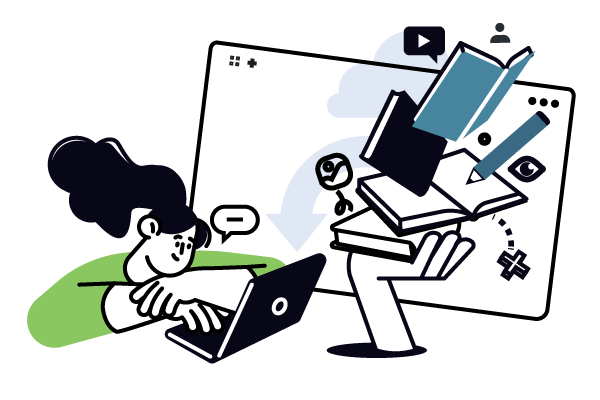
Micro-Credentials and Certifications: Illustration of a person on their laptop taking online classes for a micro-credential

In today’s volatile job market, skills, not titles, are the new currency of opportunity. Across the U.S., employers are rethinking how they identify talent, and job seekers are rethinking how they prove what they can do. Degrees still matter, but they’re no longer the only (or even the primary) signal of readiness. That’s where micro-credentials and certifications come in.

Both promise to validate skills and help you stand out. But they serve different purposes, work on different timelines, and carry different kinds of credibility. Understanding how they fit together can help you chart a smarter, more flexible career path.

Why Short-Form Learning Is Rising

The numbers tell a clear story. According to Coursera’s 2025 Micro-Credentials Impact Report, 96% of employers say that verified short-form learning in the form of micro-credentials and certifications strengthens a candidate’s job application. And nearly 9 in 10 employers say they’re willing to offer a higher starting salary (often 10–15% more) to candidates with recognized credentials (source).

What’s driving the shift? A few key factors:

  • Technology is evolving too fast for traditional degree cycles to keep up.
  • Employers are hiring for skills, not just pedigree.
  • Workers are changing roles more often and need faster ways to demonstrate new competencies.

As a result, both micro-credentials and certifications are becoming part of a new, modular model of lifelong learning.

Micro-Credentials vs. Certifications: What’s the Difference?

This is where things can get murky, so let’s break it down.

FeatureMicro-CredentialCertification
ScopeNarrow and skill-specificBroader, often covering an entire profession or technical domain
DurationShort (days to weeks)Longer (months to years)
ProviderOften universities, online platforms, or professional organizationsTypically industry associations, state boards, or accredited training bodies
VerificationMay or may not require a formal exam; focuses on demonstrated skill masteryRequires an exam and ongoing renewal or continuing education
RecognitionEmerging but growing—especially in tech, data, and GenAI fieldsEstablished and widely recognized in regulated fields (e.g., healthcare, finance, project management)
GoalDemonstrate a specific competency or upgrade a skillQualify for a regulated job role or meet industry standards

Think of it this way:

  • A micro-credential says, “I’ve learned this exact skill and can apply it right now.”
  • A certification says, “I meet the recognized standards for professionals in this field.”

The two aren’t competing. They’re complementary. Many job seekers use micro-credentials to fill skill gaps quickly or signal specialization between formal certifications.

How to Incorporate Short-Form Learning into Your Job Search Strategy

1. Choose with purpose.

Look for credentials that align directly with the skills employers are listing in current job descriptions. In 2025, that means AI literacy, data analysis, project management, and communication remain at the top of the list. If you’re switching careers, start with a micro-credential to demonstrate applied knowledge fast, then invest in a certification once you’re committed to the field.

2. Verify the credibility of the provider.

Quality matters more than quantity. Before you enroll, confirm that the credential is issued by an accredited university, a respected company, or an established association. In the U.S., 61% of learners say accreditation and employer recognition are their top priorities.

3. Combine strategically by using “skill stacking.”

Two-thirds of credential-holders now have more than one. Try stacking complementary skills:

  • Micro-credential: Generative AI Fundamentals
  • Certification: Project Management Professional (PMP)
  • Combined, they signal: “I understand both the tools and the systems that shape how they’re used.”

Stacking turns discrete skills into a story of intentional growth.

4. Make your learning visible.

Your credentials don’t help you if they’re hidden. Add them to LinkedIn, your resume, and your email signature. Include links to verified credential pages. Share your projects publicly, as employers are increasingly scanning portfolios and GitHub pages before resumes.

5. Use credentials as storytelling devices.

Each credential represents a choice you made to grow. When interviewing, don’t just list them. Explain why you pursued them and how they’ve shaped your perspective. For example:

“I completed a micro-credential in Generative AI to improve how I integrate automation into team workflows.”

That narrative turns your learning into proof of initiative.

A Few Pitfalls to Avoid

  • The “badge collector” trap. Focus beats volume. One targeted, relevant credential speaks louder than five generic ones.
  • Low-quality programs. Not all credentials are verified; choose providers with recognized accreditation or employer partnerships.
  • Over-reliance on credentials. They enhance your story, but they don’t replace experience, projects, or relationships.

The Big Picture

Both micro-credentials and certifications are reshaping how Americans learn and signal readiness for work. The best approach isn’t to pick one over the other; it’s to combine them strategically.

  • Use micro-credentials to stay current and agile in a changing landscape.
  • Use certifications to anchor your credibility and open doors in structured professions.

Together, they let you demonstrate what every employer wants to see: adaptability, initiative, and the ability to keep learning when the world changes. You’re not just collecting credentials; you’re crafting your professional narrative, one skill at a time.

Check out Top Articles on HERC Jobs.

About the Author: Deepthi Welaratna is a strategist and founder of Tiny Little Cosmos, a studio that helps individuals and organizations navigate moments of change with clarity and creativity. Deepthi has led workforce and leadership initiatives with universities, nonprofits, and companies, including Parsons ELab at The New School, the University of Toronto, The Knowledge House, Google, and the Center for Global Policy Solutions.

Filed Under: Career Planning, Professional Development Tagged With: Deepthi Welaratna

Find it Fast

Join HERC
HERConnect (Member Login)
  • Partners
  • About Us
  • Newsroom
  • Contact Us

Regional HERCS

  • Carolinas
  • Greater Chicago Midwest
  • Metro New York & Southern Connecticut
  • Michigan – Ohio – Western Pennsylvania – West Virginia
  • Mid -Atlantic
  • Midwest
  • Mountain West
  • New England
  • New Jersey – Eastern Pennsylvania – Delaware
  • Northern California
  • Northwest
  • Southeast
  • South Midwest
  • Southern California
  • Upstate New York
© 2000 – 2025 The Higher Education Recruitment Consortium is a project of the Tides Center, a 501(c)3 non-profit organization.
Tides’ State Nonprofit Disclosures
Sitemap | Terms | Privacy Policy
Powered by WSI Digital
Cookie settingsAccept Cookies
We use cookies so that we can remember you and understand how you use our site. If you do not agree with our use of cookies, please change the current settings found in our Cookie Policy . Otherwise, you agree to the use of the cookies as they are currently set....
Privacy & Cookies Policy

Privacy Overview

This website uses cookies to improve your experience while you navigate through the website. Out of these cookies, the cookies that are categorized as necessary are stored on your browser as they are essential for the working of basic functionalities of the website. We also use third-party cookies that help us analyze and understand how you use this website. These cookies will be stored in your browser only with your consent. You also have the option to opt-out of these cookies. But opting out of some of these cookies may have an effect on your browsing experience.
Necessary
Always Enabled
Necessary cookies are absolutely essential for the website to function properly. This category only includes cookies that ensures basic functionalities and security features of the website. These cookies do not store any personal information.
Non-necessary
Any cookies that may not be particularly necessary for the website to function and is used specifically to collect user personal data via analytics, ads, other embedded contents are termed as non-necessary cookies. It is mandatory to procure user consent prior to running these cookies on your website.
SAVE & ACCEPT