

herc jobs logo

JOB SEEKER LOGIN HERCONNECT (MEMBER LOGIN)

Menu
  • Job Seeker Resources
    • Search Jobs
    • Create an Account
    • Career Advice
    • Ebooks
    • Virtual Career Fairs
    • Webinars
    • Dual Careers Resources
    • Inclusive Career Hubs
  • Employer Resources
    • Become a Member
    • Products and Rates
    • Post a Job
    • Regional HERCs
    • Toolkits
  • About Us
Menu
  • Job Seeker Resources
    • Search Jobs
    • Create an Account
    • Career Advice
    • Ebooks
    • Virtual Career Fairs
    • Webinars
    • Dual Careers Resources
    • Inclusive Career Hubs
  • Employer Resources
    • Become a Member
    • Products and Rates
    • Post a Job
    • Regional HERCs
    • Toolkits
  • About Us


Archives for February 2022

How Veterans Can Make the Change to Higher Ed

February 25, 2022 by Marketing Director

Veteran higher education professional  sitting at work desk with laptop

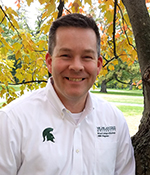
Wayne Hutchison is the Managing Director of the Full-Time MBA Program at the Broad College of Business at Michigan State University. Before that, he served in U.S. Air Force from 1997-2018, earning the rank of Major. 

In March 2020, when Michigan State University began closing down due to COVID-19, Wayne Hutchison remembered his military training, and systematically went door-to-door in his building to ensure students safely went home to await further instructions from the university on how classes would resume.

“My response to emergencies is still very much present,” Hutchison said. “It just doesn’t come out as much.”

When it came to a COVID response, there was a direct connection with Hutchison’s prior military service. But the transition to civilian life, and specifically a job in higher education, wasn’t always as smooth.

Here is how Hutchison was able to make the change from the military to higher ed:

Find a Rewarding Second Career

Hutchison’s father, Martin, served in the Air Force for 26 years, and Wayne knew by the time he was 8 he wanted to be a military officer. What he never thought about growing up was what an eventual transition to civilian life would look like.

Through significant self-reflection and the help of some amazing people, he was able to make a great transition to a second career in higher education.

Hutchison advises veterans who are the least bit curious about transitioning to higher ed to ask for help.

“Sometimes this can be challenging,” Hutchison said. “We are trained in many instances to really use the resources we have available for maximum effect and sometimes that people might think they shouldn’t or they can’t ask for help. I would encourage every veteran who is looking to transition or it’s just looking for a growth opportunity to ask for that support, and it will be there.”

He suggests finding someone who is doing the job that you might be interested in, and call or write to ask for 15 minutes of their time. Explain that you’re a veteran in transition and you’d like to talk to them about their experiences, and whether or not your skills would be a good fit. Hutchison has tried this many times and never had a bad experience.

“I have never been turned away,” Hutchison. “I find that folks are very willing to give help and support if asked. In many instances, veterans look at things outside our military service as vague or ambiguous, and sometimes it’s hard to really find that footing. One easy way to find that footing is just to connect to something you find interesting and just ask.”

Don’t Expect a Quick Transition

The process from deciding he was going to hang up his uniform to working in higher ed took Hutchison about 30 months. He started taking interviews in corporate America, did professional journey mapping, and talked to people at Michigan State, where he was an Air Force ROTC training instructor for his final four years of military service.

He had the same questions most veterans would have – how would his experience translate to a new setting? Would he need to learn new skills?

“I really remember that initial anxiety,” Hutchison said. “Okay, you’re going to give up this thing you’ve done your whole professional life, and for what exactly? I knew I wanted a personally meaningful second career but was not immediately sure of what that looked like. I think many veterans could feel that way.”

A crucial step was to plan early. Hutchison spent a year working on his resume, taking out acronyms that a civilian wouldn’t understand and removing information that was potentially confidential before it was ready to be sent out.

One key instrument of his journey was that he relied extensively on a career consultant to shape his resume and make the connections between military experience and civilian positions. He also took advantage of his spouse Jaimie, a professional career coach, who tailored his resume to his career goals and conducted mock interviews.

Check out Top Articles on HERC Jobs.

Download our free ebook, Veterans Transitioning Into Higher Ed (Revised Edition) for more information on your shift from military to civilian careers. Explore additional resources for veterans from HERC Jobs.

About the Author: Harold Gutmann is the director of brand and marketing strategy at Santa Clara University. He is a longtime writer and editor who is proud to work in higher education, and encourages all job seekers to consider it.

Filed Under: Career Transitions, Higher Education Career Exploration, Veterans Tagged With: Harold Gutmann

Grow Your Career Where You Are

February 3, 2022 by Marketing Director

Professional considering internal career advancement opportunities

A November 2021 survey commissioned by BestColleges.com found that 28% of respondents either left their previous employer or changed roles in 2021. An additional 38% of respondents plan to change roles and/or employers in 2022. On campus, about 660,000 employees have left since the pandemic began, primarily through layoffs and voluntary departures. While about one-third of these jobs were recovered in the spring of 2021, many former higher ed employees are starting their own businesses or transitioning to education-technology companies.

The force that has kept campus positions full until recently is the dedication of higher ed staff to the greater mission of higher education. According to qualitative interviews conducted by The Chronicle of Higher Education, “Many staff members stayed in their jobs despite the heavy workload, low pay, and rare opportunities for advancement. Some saw their work as intrinsic to their identities.” Commenting on career advancement opportunities, one interviewee remarked, “I don’t use the term glass ceiling. It’s a cinder block.”

This lack of internal advancement for anyone who isn’t tenure-track faculty means that advancing in an institutional role (and boosting your salary) generally requires getting a job at a different institution or leaving academia. There are several reasons, however, that you might not be interested in leaving your current institution, and that doesn’t mean your career has to stagnate.

Before joining millions of others in the Great Resignation, here are two things that higher ed job seekers need to know if they want to advance within their current institution: (i) there are two ways to further your career without moving to another institution and (ii) how and where you find internal advancement opportunities is institution-specific.

Get to Know Job Redesign and Horizontal Career Paths

There are two nontraditional methods of career advancement that might work at your academic institution: job redesign and horizontal career paths.

A job redesign can involve job enlargement and/or job enrichment. Job enlargement is the process of adding variation and scope to the standard duties of your job. It’s common for additional responsibilities to slowly creep into your to-do list. By embracing this unintentional job enlargement, you can take control of the situation and use it to your advantage. Keep track of the new responsibilities as well as any additional training and/or skills that were required. Next, identify ways to further enrich your job. That is, how can you increase the depth of your job by taking more control of new tasks through planning and organization. Comparing your original position with the new role that you are (now intentionally) moving into, along with the new skills and expertise required, may convince supervisors to redesign/reclassify your position and, hopefully, include a pay raise.

Horizontal career paths (aka career lattices) were introduced in the mid-to-late 1990s to encourage lateral employee movement. Horizontal movement allows you to challenge yourself with new tasks and find new ways of furthering the mission of education that may bind you to higher ed. Moving within the institution also means that they get to keep an employee (you!) who is a known performer. While academic institutions don’t generally seem to have this structure in place, you can facilitate this transition for yourself by applying to open positions as an internal applicant.  

Find Out How Your Institution Supports Internal Career Advancement

Unfortunately, since each institution has its own organizational structure and internal jargon, there isn’t one way to identify opportunities for internal career advancement at academic institutions. For instance, internal career advancement might be discussed as internal hiring paths or promotional paths.

To get started decoding your institution, look for an internal staffing structure. This structure should divide the institutional positions in families according to the type of work (e.g., Admin, Alumni Affairs, Facilities), then further break down into generic job profiles and progression, where available. The staffing structure should provide an overview of the tasks and complexity involved in each position and help you see how your responsibilities might change in a different family and/or position.

Each position may also have a staff position description that more specifically describes each position on campus and how it aligns with the needs of the work-family and larger institution. These position descriptions should also clearly outline what success looks like for each position. If you are interested in pursuing job redesign, this position description can help your case for job reclassification. If this is the case, you should also see if your institution has a process in place to pursue job reclassification.

If you’re having difficulty finding and/or understanding your organization’s structure, Human Resources should be able to facilitate access to these, or similar documents, and clarify most questions.

Check out more Top Articles on HERC Jobs.

About the Author:  Dr. Ada Hagan is a microbiologist with a passion for making science accessible. In 2019, Dr. Hagan founded Alliance SciComm & Consulting, LLC as a means to use her strong background in communications and higher education to help make scientific concepts more easily understood and make the academy more inclusive to future scientists from all backgrounds. Her writing and research have been featured by BBC Radio 4, Science Careers, The Scientist, Massive Science, and the American Society for Microbiology.

Filed Under: Career Advice, Career Planning, Top Articles, Women Tagged With: Ada Hagan

Find it Fast

Join HERC
HERConnect (Member Login)
  • Partners
  • About Us
  • Newsroom
  • Contact Us

Regional HERCS

  • Carolinas
  • Greater Chicago Midwest
  • Metro New York & Southern Connecticut
  • Michigan – Ohio – Western Pennsylvania – West Virginia
  • Mid -Atlantic
  • Midwest
  • Mountain West
  • New England
  • New Jersey – Eastern Pennsylvania – Delaware
  • Northern California
  • Northwest
  • Southeast
  • South Midwest
  • Southern California
  • Upstate New York
© 2000 – 2025 The Higher Education Recruitment Consortium is a project of the Tides Center, a 501(c)3 non-profit organization.
Tides’ State Nonprofit Disclosures
Sitemap | Terms | Privacy Policy
Powered by WSI Digital
Cookie settingsAccept Cookies
We use cookies so that we can remember you and understand how you use our site. If you do not agree with our use of cookies, please change the current settings found in our Cookie Policy . Otherwise, you agree to the use of the cookies as they are currently set....
Privacy & Cookies Policy

Privacy Overview

This website uses cookies to improve your experience while you navigate through the website. Out of these cookies, the cookies that are categorized as necessary are stored on your browser as they are essential for the working of basic functionalities of the website. We also use third-party cookies that help us analyze and understand how you use this website. These cookies will be stored in your browser only with your consent. You also have the option to opt-out of these cookies. But opting out of some of these cookies may have an effect on your browsing experience.
Necessary
Always Enabled
Necessary cookies are absolutely essential for the website to function properly. This category only includes cookies that ensures basic functionalities and security features of the website. These cookies do not store any personal information.
Non-necessary
Any cookies that may not be particularly necessary for the website to function and is used specifically to collect user personal data via analytics, ads, other embedded contents are termed as non-necessary cookies. It is mandatory to procure user consent prior to running these cookies on your website.
SAVE & ACCEPT