

herc jobs logo

JOB SEEKER LOGIN HERCONNECT (MEMBER LOGIN)

Menu
  • Job Seeker Resources
    • Search Jobs
    • Create an Account
    • Career Advice
    • Ebooks
    • Virtual Career Fairs
    • Webinars
    • Dual Careers Resources
    • Inclusive Career Hubs
  • Employer Resources
    • Become a Member
    • Products and Rates
    • Post a Job
    • Regional HERCs
    • Toolkits
  • About Us
Menu
  • Job Seeker Resources
    • Search Jobs
    • Create an Account
    • Career Advice
    • Ebooks
    • Virtual Career Fairs
    • Webinars
    • Dual Careers Resources
    • Inclusive Career Hubs
  • Employer Resources
    • Become a Member
    • Products and Rates
    • Post a Job
    • Regional HERCs
    • Toolkits
  • About Us


Archives for April 2022

Reconnect With Your “Why” To Figure Out What’s Next

April 7, 2022 by Marketing Director

Tired professional doign work on laptop.

When you wake up each day, are you excited to get to work? Are you motivated to perform your tasks well? If you didn’t answer a wholehearted “yes!” to those questions, don’t fret. You are not alone. 

In a time of great economic and workplace upheaval, where staffing shortages are frequent and many have chosen to join “The Great Resignation,” people are asking themselves hard questions about what they want from their jobs and careers.

Staff in many organizations have been asked to take on more responsibilities. Many feel overwhelmed, stressed out, and overburdened at work. Others feel a bit lost in their career direction. Still others feel that their work goes unappreciated and struggle for their contributions to be seen.

Kuukua Yomekpe, a former university academic advisor now chef/entrepreneur who cooks and gives lessons on West African traditional foods, spoke of working in a department down several staff whose roles went unfilled for an indefinite period of time: “I realized that I had a choice. I had bills to pay, so it was a hard, difficult choice, but my mental health was impacted. Sometimes [making the hard choice to leave a job], it’s what you have to do.”  

If you are feeling frustrated with your work responsibilities and finding less enjoyment at work, here are some strategies to help you move forward, assess where you are currently, and identify where you would like to see your career going. 

Clean Out Your Workspace 

What does cleanliness or organization have to do with work satisfaction? Research shows that decluttering supports a feeling of calm and decreases anxiety. Creating an organized and tidy workspace (and, in this time of working from home, living space) can be one step towards getting to mental clarity. 

Examine Your Values

Identify what the underlying values are that led you to your current job, role, and responsibilities. Take some time to reflect on where you are in your career and whether what you are doing now aligns with the values you identified then. If there’s a disconnect and you have a hard time answering that question, challenge yourself and ask further questions. How did you get here? Remember, this exercise is about YOUR values, not the next person’s. Getting a promotion may be your goal for this year, or perhaps carving out more time to spend with your loved ones. What is important is figuring out what YOU value, then how well your current work lines up with that. Once you find that answer, you will have your starting point to figure out what should come next. 

Get in Touch With Your Strengths 

Consider what you and others have said are your strengths. Ask your friends and colleagues what they consider to be your strengths. Are you tapping into those strengths in your current role? 

Assess Your Tasks

Are you doing things you enjoy? We all need a certain amount of satisfaction in our lives, to engage in activities that bring us happiness and lead to a sense of fulfillment. What are the activities that bring you joy? In assessing your work, ask yourself are you engaging in activities or tasks that you enjoy? Are you practicing skills that emphasize your strengths? Are you doing work that challenges you in the ways that you seek to be challenged? Are you learning and growing in your role? If the answer is no, see what you can do to introduce these activities into your life whether at work or in volunteer or other spaces.

Identify What You Want

Define what “success” means to you in terms that are meaningful and achievable, whether it’s salary, title, flexibility, influence, or whatever measure you seek. Remember if you define success in ways that are unrealistic or perfection-based, you may set yourself up for additional anxiety, stress, and unhappiness. Be compassionate to yourself. Remember that success means different things to different people. 

Be Flexible

Remember that purpose can change over time. What gets you revved up and excited in your work life at one stage of your life might be different at another stage. Revise your goals and intentions accordingly. A friend who is a successful full-time professional and a mother of two young children recently compared her life to younger, single, childless women, wistfully remembering what that was like. I reminded her that she explicitly chooses to dedicate more time to her family, prioritizing that over attendance at professional networking or social events. Reframing that as a choice helped her reconnect with a sense of success – that she WAS meeting her life goals and purpose. 

Check out some Top Articles on HERC Jobs.

Interested in higher ed job opportunities? Explore our job board with over 60,000 job postings and sign up for a free job seeker account.

About the Author: Shirley Huey, J.D., is a consultant providing research, writing, and strategic development assistance to organizational clients. Her experience includes service on academic and professional hiring, diversity, and professional development committees as well as coaching peers and mentees. She is also a freelance writer, with a focus on her passions: food and culture.

Filed Under: Career Advice, Career Planning, Top Articles Tagged With: Shirley Huey

From Military Life to Campus Life: How Veterans Can Ease into a Higher Ed Career

April 4, 2022 by Marketing Director

Portrait of higher ed professional, former veteran
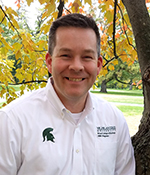
Headshot of Wayne Hutchison

Wayne Hutchison is the Managing Director of the Full-Time MBA Program at the Broad College of Business at Michigan State University. Before that, he served in U.S. Air Force from 1997-2018, earning the rank of Major. 

A veteran’s transition to civilian life, specifically a job in higher education, isn’t always smooth. Wayne Hutchison shares advice in making a career change from the military to higher education, including how to ease the transition to civilian life and what to expect from a higher ed institution.

What To Look For When Applying

When military members move to a new installation, they frequently are paired with a sponsor or mentor that will help onboard and educate them. Ideally, a higher ed institution would also be able to connect you with a veteran sponsor that is currently on staff, especially in places that traditionally have a high military or national guard population.

Sometimes it can be difficult to locate a veteran sponsor, so you should also consider connecting with mentors in career fields you are interested in.

“I realized in this day and age there are so many resources to make that connection technologically,” Hutchison said. “But you cannot replace or devalue what it means to have the human factor, and if you have a vet that can have that conversation with.”

If a mentoring or sponsor program isn’t available at the school that you’re looking at, there are also federal, state, and local agencies that have mental, medical, and support resources for veterans and their families.

The transitions a family can also go through are significant, and the needs that a family will require are diverse. Even if you have difficulties in connecting to individuals with firsthand military experiences, many support resources across the country that can help a military family in transition exist.

Adjusting to a New Workplace Culture

There are many aspects of a higher ed workplace that will feel familiar to veterans. In both environments, you are working with large groups of people on a deadline for a common cause. But there are differences that aren’t necessarily better or worse, but do require an adjustment.

While the military presents a linear chain of command where it’s clear how decisions will get made, a higher ed workplace may require decision making by consensus or crowdsourcing.

In military service, a diverse group of individuals goes through similar training and development, with a common connection based on the work they do, to create a strong collective. In the higher education environment, military veterans can find challenges in connecting professionally with others that do not share their experiences.  

The speed at which you operate may also be an adjustment, since many of the tasks you complete in a workday may not be emergency-related or high-stakes in nature.

One thing that helps is to never refuse training and always be on the lookout for educational opportunities to prepare for new roles. Hutchison has said yes every time he’s asked to be on a committee or consider taking a workshop. It’s another example of how the ethos he developed in military service has helped him sustain a second career. He also pursued his Ph.D., a six-year odyssey that has prepared him to advance in his career in higher education administration.

“For veterans looking to transition into roles in higher education, know that it can be a very rewarding experience, with several opportunities to leverage skills and expertise honed during your military service,” Hutchison said. “Advance planning and research, paired with a willingness to adapt to available roles, will help set you up for success. After you make the transition, continue to look for opportunities to serve the institution while identifying areas for personal growth.”

Check out Top Articles on HERC Jobs.

Download our free ebook, Veterans Transitioning Into Higher Ed (Revised Edition) for more information on your shift from military to civilian careers. Explore additional resources for veterans from HERC Jobs.

About the Author: Harold Gutmann is the director of brand and marketing strategy at Santa Clara University. He is a longtime writer and editor who is proud to work in higher education, and encourages all job seekers to consider it.

Filed Under: Career Transitions, Higher Education Career Exploration, Veterans Tagged With: Harold Gutmann

Find it Fast

Join HERC
HERConnect (Member Login)
  • Partners
  • About Us
  • Newsroom
  • Contact Us

Regional HERCS

  • Carolinas
  • Greater Chicago Midwest
  • Metro New York & Southern Connecticut
  • Michigan – Ohio – Western Pennsylvania – West Virginia
  • Mid -Atlantic
  • Midwest
  • Mountain West
  • New England
  • New Jersey – Eastern Pennsylvania – Delaware
  • Northern California
  • Northwest
  • Southeast
  • South Midwest
  • Southern California
  • Upstate New York
© 2000 – 2025 The Higher Education Recruitment Consortium is a project of the Tides Center, a 501(c)3 non-profit organization.
Tides’ State Nonprofit Disclosures
Sitemap | Terms | Privacy Policy
Powered by WSI Digital
Cookie settingsAccept Cookies
We use cookies so that we can remember you and understand how you use our site. If you do not agree with our use of cookies, please change the current settings found in our Cookie Policy . Otherwise, you agree to the use of the cookies as they are currently set....
Privacy & Cookies Policy

Privacy Overview

This website uses cookies to improve your experience while you navigate through the website. Out of these cookies, the cookies that are categorized as necessary are stored on your browser as they are essential for the working of basic functionalities of the website. We also use third-party cookies that help us analyze and understand how you use this website. These cookies will be stored in your browser only with your consent. You also have the option to opt-out of these cookies. But opting out of some of these cookies may have an effect on your browsing experience.
Necessary
Always Enabled
Necessary cookies are absolutely essential for the website to function properly. This category only includes cookies that ensures basic functionalities and security features of the website. These cookies do not store any personal information.
Non-necessary
Any cookies that may not be particularly necessary for the website to function and is used specifically to collect user personal data via analytics, ads, other embedded contents are termed as non-necessary cookies. It is mandatory to procure user consent prior to running these cookies on your website.
SAVE & ACCEPT