
herc jobs logo

JOB SEEKER LOGIN HERCONNECT (MEMBER LOGIN)

Menu
  • Job Seeker Resources
    • Search Jobs
    • Create an Account
    • Career Advice
    • Ebooks
    • Virtual Career Fairs
    • Webinars
    • Dual Careers Resources
    • Inclusive Career Hubs
  • Employer Resources
    • Become a Member
    • Products and Rates
    • Post a Job
    • Regional HERCs
    • Toolkits
  • About Us
Menu
  • Job Seeker Resources
    • Search Jobs
    • Create an Account
    • Career Advice
    • Ebooks
    • Virtual Career Fairs
    • Webinars
    • Dual Careers Resources
    • Inclusive Career Hubs
  • Employer Resources
    • Become a Member
    • Products and Rates
    • Post a Job
    • Regional HERCs
    • Toolkits
  • About Us


Archives for May 2025

Busting Myths: Making a Mid-Career Transition to Higher Ed

May 12, 2025 by Marketing Director

Mid-Career Transitions: Two mid-career professionals having an engaging discussion.

Are you a professional considering a mid-career transition into higher education but worried you might be “too old”? You’re not alone. Many mid-career professionals hesitate to transition into higher education, fearing that universities prefer younger candidates or that adapting to academia will be too difficult.

The truth? Age is an asset, not a barrier. Whether in teaching, administration, student services, or operations, mid-career professionals bring essential expertise that enriches higher ed institutions.

Despite this, myths persist—like the belief that only early-career academics get hired, that mid-career professionals can’t adapt to academic culture, or that younger professionals are more tech-savvy. These misconceptions prevent many qualified candidates from pursuing mid-career transitions into rewarding careers in higher education.

This article will debunk common myths and show why mid-career professionals are a perfect fit for higher ed.

Myth #1: “Higher Ed Prefers Younger Candidates”

A common fear among professionals considering a mid-career transition into higher education is that universities prefer to hire younger candidates—especially recent PhDs or early-career academics. Many assume that if they’re in their 30s, 40s, or beyond, they will be overlooked in favor of younger applicants with more traditional academic paths.

Higher education values experience and potential. Colleges and universities actively seek professionals with diverse skill sets, leadership abilities, and industry knowledge. Many roles in higher ed—such as faculty positions, academic advising, administration, and student services—benefit from professionals who bring real-world expertise. Institutions are increasingly recognizing the value of hiring individuals who can bridge the gap between academia and the workforce, offering students practical insights and mentorship opportunities.

Additionally, certain sectors within higher education are facing workforce shortages, making now an excellent time for career changers to enter the field. Community colleges, continuing education programs, and online learning platforms are expanding opportunities for professionals with non-traditional backgrounds.

If you have years of experience in business, healthcare, government, or other industries, your skills are in demand. Universities need professionals who can contribute fresh perspectives, enhance student learning, and bring practical applications to academic settings. Age is not a disadvantage—it is a competitive edge.

Myth #2: “Mid-Career Professionals Can’t Adapt to Academia”

Another common concern for career changers is the belief that transitioning into academia is too difficult—that higher education has its own unique culture and that mid-career professionals will struggle to fit in. While academia does have its own norms, adaptability matters more than prior academic experience.

The truth is that many mid-career professionals already have the skills needed to thrive in higher ed. Leadership, project management, and public speaking—skills honed in industries like business, healthcare, government, and nonprofit work—are highly transferable to roles in teaching, administration, and student services. Many professionals already engage in activities similar to academic work, such as training employees, giving presentations, conducting research, or managing large-scale projects.

Successful career changers have transitioned into roles such as adjunct faculty, academic advisors, career counselors, and program coordinators. If you are open to learning and willing to adapt, higher education could be more accessible than you think.

Myth #3: “Technology and Innovation Are for the Younger Generation”

A major concern for some mid-career professionals considering higher education is the belief that today’s universities rely heavily on new technologies—learning management systems, virtual classrooms, AI tools—and that younger professionals are naturally better equipped to handle these changes.

The reality is that adaptability, once again, matters more than age. Many mid-career professionals already use digital tools in their current roles, whether they are managing online meetings, analyzing data, using customer relationship management (CRM) systems, or delivering virtual training. Higher education technology is just another tool—one that can be learned like any other workplace software.

In fact, experience can be an advantage in navigating technology. Mid-career professionals bring critical thinking skills, problem-solving abilities, and a strategic mindset to the adoption of technology. Rather than chasing trends, they focus on how to use technology effectively—which is exactly what universities need. Institutions do not just want tech-savvy employees; they want professionals who understand how to integrate technology in ways that enhance learning and student engagement.

Moreover, many universities offer training and professional development in new technology, so career changers do not have to be experts from day one. What matters most is a willingness to learn.

Myth #4: “Older Professionals Won’t Relate to Students

Many mid-career professionals worry that they will struggle to connect with younger students, believing that universities tend to prefer faculty and staff who are close in age to the student population. This myth can discourage experienced professionals from pursuing roles in teaching, advising, or student services—when in reality, their life experience makes them uniquely valuable.

The truth is that students benefit from guidance beyond academics. While younger professionals may share cultural references with students, mid-career professionals bring something just as important—real-world wisdom, career insights, and mentorship. Many students seek out professors, advisors, and mentors who can provide career guidance, networking opportunities, and life skills that go beyond the classroom.

Additionally, higher ed is not just for young students. Adult learners, graduate students, and career changers make up a significant portion of university populations. Mid-career professionals often relate well to these students because they have navigated career transitions and workplace challenges themselves.

Why Age is an Asset

We have debunked the biggest myths—higher education does not favor younger candidates. All mid-career professionals can adapt to academia. Technology is a learnable tool (not an obstacle), and experience helps you relate to students in meaningful ways. Your career background is an advantage, not a limitation.

If you are considering a career change, take the next step: research higher ed roles, connect with professionals in the field, explore training opportunities, and tailor your resume to highlight your transferable skills. Many mid-career professionals have successfully made the transition—you can too.

Check out Top Articles on HERC Jobs.

About the Author: Shelby Harris is a freelance writer and public sociologist. She holds a master’s degree in Sociology from East Carolina University.
Filed Under: Career Transitions, Higher Education Career Exploration Tagged With: Shelby Harris

Mindful Media Habits for a Healthier Mindset

May 6, 2025 by Marketing Director

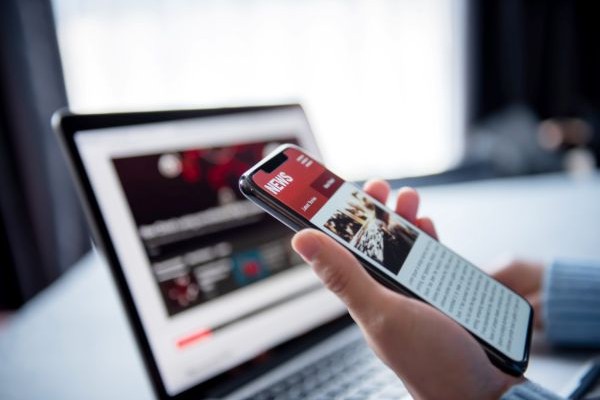
Mindful Media Habits: Photo of person holding smartsphone with news on screen and laptop screen in background with news headlines

If watching and reading the news is causing anxiety, then you might want to rethink your news consumption. Adopting mindful media habits may help you feel less overwhelmed and decrease stress. While it’s essential to stay informed, it’s crucial to do so within a scope that makes sense for you, especially for your mental health.

Being aware and making a few adjustments to your daily news consumption can have a significant impact on your overall well-being. Here are some tips for staying informed without anxiety:

Limit the Amount of Time Spent Consuming News

Reflect on how much of your day is spent watching the news and scrolling through your social media feeds. Check your phone’s Screen Time or Digital Wellbeing settings to see how much time you spend on your phone and which apps you use the most. Does it seem like too much? A Harvard expert recommends limiting time spent on social media to 30 minutes a day, 15 minutes to political news coverage of any kind, and 30 minutes a day to reading or watching various news sources. If that seems impossible, an alternative approach is to track your time and gradually reduce it by a few minutes every day until you find the amount that feels right and healthy for you.

Pick Strategic Times to Consume News

Avoid consuming news throughout the day and determine when to get your news fix. If the news affects your work, think about doing it in the morning when you first log on to your computer. If staying informed about current events isn’t essential to your daily routine, the early evening, before you begin to wind down, may be a great time to catch up on the news. Oh, and don’t forget to mute “breaking news” notifications too!

Be Mindful and Intentional

Try to steer clear of getting lost in mindless scrolling. Focus on the issues that matter most to you and skip the topics that may be “hot” now but are simply irrelevant to you. Also, stick to the sources you trust and scroll past those that consistently produce content or commentary that triggers you. You can apply that thinking to your friends and other social media connections. You might even think about hiding their posts, or if they consistently share news that frustrates you, consider unfriending them.

Explore a Variety of Sources and News Types

Don’t rely solely on a specific social media account or cable news channel for your news. Add local news or public radio to get community stories. Visit the public library or local bookstores to access traditional media formats, such as print newspapers or magazines. Step out of that tunnel vision and remember that there are other types of news out there, including lifestyle, sports, arts and music, food, entertainment, and human-interest stories.

Focus on Facts; Ignore the Trolls

Often, it’s not the articles or stories that rile people up – it’s reading the comments or seeing the reactions to them. Like, why are multiple people laughing at that tragic story? Trying to make it make sense is a waste of time and does not benefit your mental health.

Turn It All Off and Do Meaningful Activities

Reconnect with yourself through journaling or with your family by engaging in activities like taking daily walks and experimenting with new recipes. Feeling negative about people outside of your circle? Look for volunteer opportunities with local nonprofits or sign up for a class or community event. Embrace experiences that draw you away from your numerous screens and remind you that there’s more to life than news headlines.

For most news enthusiasts, it’s easier to think that news consumption can be managed than actually to do it. But recognizing that it would be beneficial to limit doomscrolling and make an effort to strike a balance between news and mental health is often unavoidable. When it comes to following the news, especially when it starts to feel overwhelming, it’s okay to take a timeout. Do think, “Out of sight, out of mind,” even if it’s just for a couple of hours—every little distraction counts.

Check out Top Articles on HERC Jobs.

About the Author: Marcia Silva is the director of marketing and communications at the Higher Education Recruitment Consortium. She strives to create engaging, research-informed content that empowers job seekers and employers committed to creating inclusive workplaces. She is passionate about using digital media and technology to encourage participation and strengthen communities.

Filed Under: Career Advice, Top Articles, Work/Life Balance Tagged With: Marcia Silva

Find it Fast

Join HERC
HERConnect (Member Login)
  • Partners
  • About Us
  • Newsroom
  • Contact Us

Regional HERCS

  • Carolinas
  • Greater Chicago Midwest
  • Metro New York & Southern Connecticut
  • Michigan – Ohio – Western Pennsylvania – West Virginia
  • Mid -Atlantic
  • Midwest
  • Mountain West
  • New England
  • New Jersey – Eastern Pennsylvania – Delaware
  • Northern California
  • Northwest
  • Southeast
  • South Midwest
  • Southern California
  • Upstate New York
© 2000 – 2025 The Higher Education Recruitment Consortium is a project of the Tides Center, a 501(c)3 non-profit organization.
Tides’ State Nonprofit Disclosures
Sitemap | Terms | Privacy Policy
Powered by WSI Digital
Cookie settingsAccept Cookies
We use cookies so that we can remember you and understand how you use our site. If you do not agree with our use of cookies, please change the current settings found in our Cookie Policy . Otherwise, you agree to the use of the cookies as they are currently set....
Privacy & Cookies Policy

Privacy Overview

This website uses cookies to improve your experience while you navigate through the website. Out of these cookies, the cookies that are categorized as necessary are stored on your browser as they are essential for the working of basic functionalities of the website. We also use third-party cookies that help us analyze and understand how you use this website. These cookies will be stored in your browser only with your consent. You also have the option to opt-out of these cookies. But opting out of some of these cookies may have an effect on your browsing experience.
Necessary
Always Enabled
Necessary cookies are absolutely essential for the website to function properly. This category only includes cookies that ensures basic functionalities and security features of the website. These cookies do not store any personal information.
Non-necessary
Any cookies that may not be particularly necessary for the website to function and is used specifically to collect user personal data via analytics, ads, other embedded contents are termed as non-necessary cookies. It is mandatory to procure user consent prior to running these cookies on your website.
SAVE & ACCEPT