
herc jobs logo

JOB SEEKER LOGIN HERCONNECT (MEMBER LOGIN)

Menu
  • Job Seeker Resources
    • Search Jobs
    • Create an Account
    • Career Advice
    • Ebooks
    • Virtual Career Fairs
    • Webinars
    • Dual Careers Resources
    • Inclusive Career Hubs
  • Employer Resources
    • Become a Member
    • Products and Rates
    • Post a Job
    • Regional HERCs
    • Toolkits
  • About Us
Menu
  • Job Seeker Resources
    • Search Jobs
    • Create an Account
    • Career Advice
    • Ebooks
    • Virtual Career Fairs
    • Webinars
    • Dual Careers Resources
    • Inclusive Career Hubs
  • Employer Resources
    • Become a Member
    • Products and Rates
    • Post a Job
    • Regional HERCs
    • Toolkits
  • About Us


Archives for August 2021

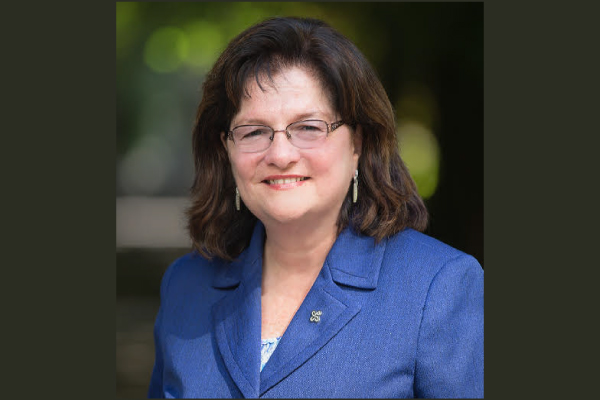
Get to Know a Higher Ed Professional: Dr. Carmen Suarez, Southern Illinois University Carbondale

August 9, 2021 by Marketing Director

The “Get to Know a Higher Ed Professional” series features people working in various positions in higher education, to get an inside perspective of what they do and what inspires them.

Dr. Carmen Suarez is an Assistant Professor of Practice in the Educational Administration and Higher Education Department of Southern Illinois University Carbondale. She served as vice president for global diversity and inclusion at Portland State University and the founding chief diversity officer of the University of Idaho.

What would you say is the main benefit of working in higher education, and the top challenge?

The chance to do extremely meaningful work is super satisfying. We’re all here for the purpose of the students, helping them achieve their goals to the best of our ability, partnering with them, and hopefully meeting them in a way that is one of equity and equality.

Because of my field, the most challenging though is you’re an expert at the table, and you’re telling people how you know things need to be done and they argue and they think they know better. People don’t argue with accountants when they tell you this is how you should do things, but people seem to have many opinions and do not necessarily respect DEI [Diversity, Equity, and Inclusion] as a profession.

And another challenge is we don’t value education. I find it appalling that we don’t invest in our institutions of higher education. That’s fact, that’s quantitative. You look at the contributions, state and federal, over the years. And we have been greatly hobbled by, not only the lack of financing, but the direction of the financing. We focus on STEM [science, technology, engineering, and maths] rather than STEAM [science, technology, engineering, arts, and maths]. I read some articles recently that in the U.S. we’re actually becoming less inventive and less creative. For over a hundred years, we’ve lead inventiveness. And we’re not anymore.

How did you decide to lead DEI [Diversity, Equity, and Inclusion] education initiatives?

You don’t wake up one day saying I’m going to work in diversity or I’m going to be an affirmative action officer. I feel like the Forrest Gump of DEI. You know, “I was there when…” Certainly not in that first wave at all of our civil rights pioneers and heroes, you know the Martin Luther Kings and the Cesar Chavezes, but I’m one of the first wave of students to receive what they called then “minority fellowships.”

My experiences growing up led me to this field as well. I remember in third grade when I was first called a Hispanic slur. In addition, I went to a Catholic school in Chicago, we saw those documentaries of the liberation of the Holocaust camps with people looking like little skeletons with tattered clothes. That’s horrible for a child to see, but we learned. We learned that we counter that message of hate with education about what happened. Despite the Holocaust deniers, most of us around the world know it happened, even if memories are fading of the direct view of it, but it becomes a reality. Hate is ever prevalent against those that appear “different.”  Education is a key to counter the continuum of oppression.

Why is this an exciting time for higher ed professionals to consider jobs in DEI?

There are many successes with so many universities now having chief diversity officers and slowly migrating it to a vice chancellor/vice president position. I think that’s all super, super gratifying to see that growth and understanding. Some specific kinds of institutions have done this, but we have 3,200 institutions of higher education in this country, and it needs to happen more. We’re a long way from fully getting that this is real, that it’s concrete. It’s not just values that we’re trying to teach others, this is just survival of higher education to understand diversity. We are a diverse multicultural society. We’re not going back.

The numbers and percentages of the faculty ranks are still just as difficult, as well as in senior staff positions. Look at fundraising, or institutional advancement, look at finance, look at human resources, look at the deans across the country—you pick the title and we’re still dramatically underrepresented. That hasn’t changed, and you look at percentages and the area that’s gone well is community colleges. But we have to ask ourselves, so why do Latinx and Black faculty and staff cluster at community colleges?

We’re in the middle of it right now. In any significant historical time when you’re in the middle of it, it is very hard to work through it and move forward. I am a glass-half-full person. I’ve always been an optimist—the optimist invents the airplane and the pessimist the parachute. And I think that we will work our way through this but not without a whole lot of pain along the way. The pain is here, more pain to go. But I think that we will work our way through this as we’ve done when we look at all the tragedies of history, we do tend to move forward, we do become much more cognizant.

About the Author: Harold Gutmann is the director of brand and marketing strategy at Santa Clara University. He is a longtime writer and editor who is proud to work in higher education, and encourages all job seekers to consider it.

Filed Under: Higher Education Career Exploration, Job Seeker Success Stories, Leadership, Professionals of Color, Women Tagged With: Harold Gutmann

Write Your Diversity Statement in Four Steps

August 3, 2021 by Marketing Director

The diversity, or inclusion, statement is becoming a staple of the academic job packet. But unless the hiring institution is clear about what they expect, how do you know what to write? And further yet, how do you go about writing it?

A 2018 paper from the University of Michigan described the common elements of diversity statements written for a postdoctoral fellow-to-faculty program. The program informed applicants “that the university was looking for indicators of demonstrated commitments to diversity, equity and inclusion and valued the different ways this might be demonstrated.” Arguably, any department or institution that incorporates the diversity statement into their evaluation of a candidate would have similar expectations.

Below are four steps that you can use to craft a diversity statement. The first three steps will guide the incorporation of three key components to a compelling statement: your background, what drives your commitment to diversity, and how you demonstrate that commitment. The final step provides resources and suggestions to refine your statement for inclusion in your job packet.

1. Provide Your Context

This is where you write your life’s story. Well, part of it anyway. Your experiences, expectations, and identities as a human all influence your perspective on diversity. Furthermore, they are potentially important context for the reader to fully understand your commitment and solutions. Since step four is revision, go ahead and write down any potentially important background information that comes to mind.

There are reasons (e.g., legal, personal, political) why you may not want to reveal all of your identities and there are professionals who advise against it. If that is the case for you, skip over them.

2. Identify Your Diversity Conflict

Why are you committed to diversity? What realization or life experience(s) prompted your commitment? These are the questions that need to be answered during step two. I call this a “diversity conflict” because the answers to these questions are generally the situation(s) where an internal (or external) conflict arose. As an example, my own diversity conflict occurred when research on gender inequity in STEM shattered my long-held belief in meritocracy. Because I have a strong, motivating desire for everything to be fair, the resolution of that internal conflict was a commitment to diversity, equity, inclusion, and justice.

Like in step one, think back and list any personal experiences, or experiences that you witnessed, that prompted a similar internal conflict. Importantly, the conflict(s) need to resolve into your commitment to diversity. If that resolution hasn’t occurred yet (it hadn’t for me!), then I encourage you to use this exercise as a means to identify it for yourself.

3. Demonstrate Your Commitment

How do you demonstrate your commitment to diversity? Many (if not all) of the answers to this question are already at your fingertips, in your CV or resume! List every position you held or project that you worked on (yes, even your research!) that furthered equity and inclusion. Remember, the goal is to demonstrate commitment, so historical (even pre-diversity-conflict) examples are fair game — dig out your old CVs and resumes, too.

Next, think outside the nine to five. In many cases, your personal diversity conflict and resolution also led to changes in your everyday that also demonstrate commitment. For example, did you start a blog or YouTube channel to talk about your diversity conflict (e.g., the challenges of LGBTQA+ life in the rural U.S.)? That’s furthering diversity through outreach.

4. Revise and Refine Your Statement

Now it’s time for the hard part. You need to sort through everything you wrote in steps two and three to find a cohesive message for your diversity statement.

To know what needs to be kept or tossed, first brush up on diversity statement etiquette and revise accordingly. Next, chose your diversity conflict and flesh out the details: what happened, when, where, how did you react, what was your resolution, etc. (Remember, if appropriate, ask permission before sharing another’s experience!) After the conflict has been described in the appropriate detail, go back through the first section to set the appropriate context. Ensure that there is enough detail (but not too much) for your reader to understand the full impact of the conflict for you.

Ideally, the context and conflict will comprise the first half of your statement and the second half will focus on how you demonstrate your commitment to diversity. Be sure that you’ve crafted a logical flow that seamlessly transitions your reader from your background, through your diversity conflict, and the demonstration of your commitment to diversity.

Finally, get several colleagues (from diverse backgrounds) to give your diversity statement a read and incorporate their suggestions as appropriate. By the end, you should have a diversity statement that reflects both your values and your value.

More Diversity Statement Resources:

Vanderbilt Center for Teaching

The Professor Is In: Making Sense of the Diversity Statement

Check out more Top Articles on HERC Jobs.

About the Author:  Dr. Ada Hagan is a microbiologist with a passion for making science accessible. In 2019, Dr. Hagan founded Alliance SciComm & Consulting, LLC as a means to use her strong background in communications and higher education to help make scientific concepts more easily understood and make the academy more inclusive to future scientists from all backgrounds. Her writing and research have been featured by BBC Radio 4, Science Careers, The Scientist, Massive Science, and the American Society for Microbiology.

Filed Under: Career Advice, Job Search, Personal Branding, Top Articles Tagged With: Ada Hagan

Find it Fast

Join HERC
HERConnect (Member Login)
  • Partners
  • About Us
  • Newsroom
  • Contact Us

Regional HERCS

  • Carolinas
  • Greater Chicago Midwest
  • Metro New York & Southern Connecticut
  • Michigan – Ohio – Western Pennsylvania – West Virginia
  • Mid -Atlantic
  • Midwest
  • Mountain West
  • New England
  • New Jersey – Eastern Pennsylvania – Delaware
  • Northern California
  • Northwest
  • Southeast
  • South Midwest
  • Southern California
  • Upstate New York
© 2000 – 2025 The Higher Education Recruitment Consortium is a project of the Tides Center, a 501(c)3 non-profit organization.
Tides’ State Nonprofit Disclosures
Sitemap | Terms | Privacy Policy
Powered by WSI Digital
Cookie settingsAccept Cookies
We use cookies so that we can remember you and understand how you use our site. If you do not agree with our use of cookies, please change the current settings found in our Cookie Policy . Otherwise, you agree to the use of the cookies as they are currently set....
Privacy & Cookies Policy

Privacy Overview

This website uses cookies to improve your experience while you navigate through the website. Out of these cookies, the cookies that are categorized as necessary are stored on your browser as they are essential for the working of basic functionalities of the website. We also use third-party cookies that help us analyze and understand how you use this website. These cookies will be stored in your browser only with your consent. You also have the option to opt-out of these cookies. But opting out of some of these cookies may have an effect on your browsing experience.
Necessary
Always Enabled
Necessary cookies are absolutely essential for the website to function properly. This category only includes cookies that ensures basic functionalities and security features of the website. These cookies do not store any personal information.
Non-necessary
Any cookies that may not be particularly necessary for the website to function and is used specifically to collect user personal data via analytics, ads, other embedded contents are termed as non-necessary cookies. It is mandatory to procure user consent prior to running these cookies on your website.
SAVE & ACCEPT