
herc jobs logo

JOB SEEKER LOGIN HERCONNECT (MEMBER LOGIN)

Menu
  • Job Seeker Resources
    • Search Jobs
    • Create an Account
    • Career Advice
    • Ebooks
    • Virtual Career Fairs
    • Webinars
    • Dual Careers Resources
    • Inclusive Career Hubs
  • Employer Resources
    • Become a Member
    • Products and Rates
    • Post a Job
    • Regional HERCs
    • Toolkits
  • About Us
Menu
  • Job Seeker Resources
    • Search Jobs
    • Create an Account
    • Career Advice
    • Ebooks
    • Virtual Career Fairs
    • Webinars
    • Dual Careers Resources
    • Inclusive Career Hubs
  • Employer Resources
    • Become a Member
    • Products and Rates
    • Post a Job
    • Regional HERCs
    • Toolkits
  • About Us


Archives for September 2023

Cover Letter Tips for Veterans (Video)

September 15, 2023 by Marketing Director

Cover Letter Tips for Veterans: Higher ed professional working in lab

Need cover letter tips? It helps to first review what the purpose of a cover letter is. It serves as your introduction to the employer and tells your story as it directly relates to the position’s responsibilities and qualifications. The cover letter summarizes what you bring to the employer and the role, however, it should not be a repeat of your resume. 

When crafting your cover letter, think of the entirety of your career as you share why you’re a good fit for the position. And perhaps most importantly, remember that the cover letter helps persuade the employer to invite you to an interview. Just like the resume, each cover letter should be tailored specifically to the job opportunity. 

The video provides cover letter tips and a sample format with a breakdown of each section.

Resource links referenced in the video:

  • New to Crafting a Cover Letter? What to Include and Why
  • Optimize Your Resume and Cover Letter
  • How to Avoid the “I’m Wonderful” Cover Letter

Download our free ebook, Veterans Transitioning Into Higher Ed (Revised Edition) for more information on your shift from military to civilian careers. Explore additional resources for veterans from HERC Jobs.

About the Author: Sara Ermeti has worked in HR leadership for nearly 30 years in various industries such as higher education, NFP, Religious, Financial, Entertainment, and Transportation. She is also an adjunct professor teaching courses in HR and Business. Sara is a certified coach and resume writer offering individual and business consulting through Esperto HR Office.

Filed Under: CV/Resume Advice, Job Search, Veterans Tagged With: Sara Ermeti

How to Work Better in a Multigenerational Workplace

September 8, 2023 by Marketing Director

Multigenerational Workplace: Team meeting in progress

“Boomers are bad with tech.”

“Millennials are lazy.”

“Gen X’ers are too cynical.”

“Gen Z’ers don’t want to work.”

We’ve all heard the common stereotypes based on generational birth cohorts, and most of us can summon a personal example in a multigenerational workplace that supports these broad brushstroke statements. While a little intergenerational teasing might be fun when it comes to fashion or knowing why a floppy disk isn’t floppy, decisions that impact our working environments are sometimes made based on these flawed assumptions. Generational differences can become a source of tension or conflict among colleagues and when not addressed can have a tangible impact on how you (and your colleagues) feel about staying at your workplace and possibly looking for a job elsewhere.

With members of five generations currently working, age is the most dominant form of diversity found in the labor force. Of the higher ed professionals and job seekers that took the 2023 HERC Job Seeker Survey, 17% reported being 22-32-year-olds, 30% 33-43-year-olds, 26% 44-54-year-olds, 21% 55-65-year-olds, and 5% 66-76-year-olds. Interestingly, studies have repeatedly shown that the perception of generational differences is greater than actual generational differences. The practical implication of this finding is that we can actually mitigate friction caused by generational differences and leverage age diversity to the benefit of all involved – but first, we have to understand each other.

Each generation is shaped by the social, cultural, and technological developments of its time. Communication styles, work-life balance needs, technology usage, leadership styles, and career expectations may clash, creating the potential for misunderstanding and tension in a multigenerational workplace. Communication plays an essential role in bridging these generational gaps. It helps foster understanding, empathy, and collaboration among employees of different generations.

The Five Generations:

  • Traditionalists/Silent Generation (1928-1945)
  • Baby Boomers (1946-1964)
  • Generation X (1965-1980)
  • Millennials (1981-1996)
  • Generation Z (1997-2012)

Here are some key generational workplace differences to familiarize yourself with[1]:

1. Communication Styles:

Traditionalists/Silent Generation: Tend to prefer formal, written communications such as memos and letters and face-to-face meetings.

Baby Boomers: Likely to appreciate face-to-face and phone conversations. They also adapted to emails as they emerged in the workplace.

Generation X: Comfortable with a blend of communication, including face-to-face meetings, emails, and instant messaging.

Millennials: Favor digital communication, including email, instant messaging, social media, and video conferencing.

Generation Z: Prefer quick, efficient, and digital-first communication, such as texting, social media, and other digital platforms.

2. Work-Life Balance:

Traditionalists/Silent Generation and Baby Boomers: Generally, these generations are more likely to separate work from personal life and may work long hours.

Generation X: They introduced the concept of work-life balance and tend to value the flexibility to accommodate family and personal life.

Millennials and Generation Z: These generations often seek a work-life integration where work and personal life blend seamlessly. They value flexibility and remote work opportunities.

3. Attitude Toward Authority and Hierarchy:

Traditionalists/Silent Generation and Baby Boomers: Often respect hierarchical structures, prefer clear reporting relationships, and tend to value loyalty to the institution.

Generation X: Tend to be more independent, appreciate a flatter organizational structure, and value results over tenure.

Millennials and Generation Z: Often seek a collaborative environment and desire regular feedback. They appreciate leaders who are mentors or coaches.

4. Technology Adoption:

Traditionalists/Silent Generation and Baby Boomers: While many individuals in these generations have adapted to technology, they may not be as comfortable as younger generations. They often prefer traditional methods of doing things.

Generation X: This generation bridges the gap between digital immigrants and digital natives. They adapt to necessary technology but also appreciate analog methods.

Millennials and Generation Z: These generations are digital natives, comfortable with using and adopting various forms of technology, and are often the drivers of digital transformation in the workplace.

5. Views on Job Stability and Career Progression:

Traditionalists/Silent Generation and Baby Boomers: Often prefer job stability and tend to stay with one employer for a longer period.

Generation X: Tend to be more skeptical about job security due to economic recessions and corporate downsizing during their formative years.

Millennials and Generation Z: Generally more comfortable with job-hopping, and they seek continuous learning and career development opportunities.

By taking the time to understand these generational differences, you can help foster an inclusive and harmonious workplace that respects and leverages the strengths of each generation.

Check out Top Articles on HERC Jobs.

About the Author: Jennifer O’Neill is the program manager for the Higher Education Recruitment Consortium. Her background includes multiple roles in higher education, including departmental administration, academic advising, student services, community college governance, and faculty positions at both community colleges and universities. She is passionate about providing sociologically-informed, data-driven educational experiences in any context and enjoys providing others with the tools they need to be more effective in their roles.

[1]  Adapted from OpenAI. (2023). ChatGPT-4 conversation.

Filed Under: Career Advice, Leadership, Resilience, Top Articles Tagged With: Jennifer O’Neill

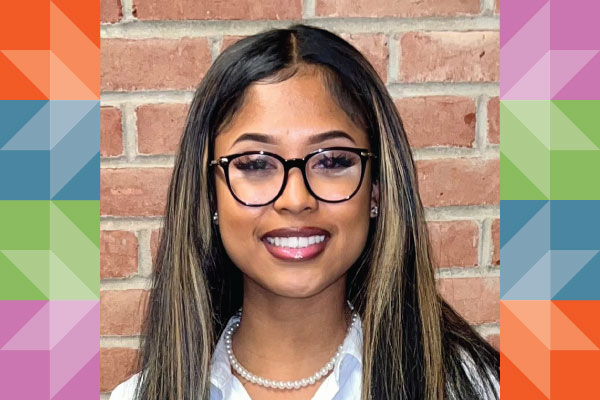
Why I Work in Higher Ed: Natali Smith, Admissions Counselor

September 5, 2023 by Marketing Director

Why I Work in Higher Ed: Natali Smith, Admissions Counselor

The “Why I Work in Higher Ed” series features people working in higher education to get an inside perspective of what they do and what inspires them.

Natali Smith is an Admissions Counselor in the Undergraduate Admissions Department at Wright State University. Born and raised in Dayton, Ohio, Natali graduated in December 2022 from Wright State University with a Bachelor of Science in Organizational Leadership and is now working on earning her Master of Science in Leadership Development. In her free time, she enjoys spending time with family and friends, doing retail therapy, reading, and trying new foods.

How would you describe your current role in higher education?

My job as an Admissions Counselor is to be of service to students — whether it’s going to college fairs, visiting high schools, or helping students with the application process. I do lots of outreach, making sure students know their next steps or seeing if they have any questions. I also give admissions presentations, answer phone calls, and communicate by email. I am very passionate about helping others. I want to be able to help others who may have a similar experience or background as me. There are some students who may not have family or other people to help them with the process, like first-generation students.

Can you give an overview of your career path that has led you to where you are today?

If you asked me a year ago, I would not have guessed that I would be working in Higher Education nor Undergraduate Admissions. I went with the flow when it came to my professional career upon graduating because I knew that with my degree and skills, I could go into any field. Previously, I worked for a lot of retail organizations; Apple was the most recent, where I worked as a technical specialist.

As a student, I was very involved on campus. I was a peer mentor and held many leadership positions including President of NPHC, Vice President of Alpha Kappa Alpha Sorority Incorporated, Vice President of The Black Student Union, and more. Due to my involvement, I was really able to build connections and grow my networking skills. From my student involvement, I knew that funding was an issue for a lot of our student organizations. I thought about what we needed to do and who to connect with to get the help that we needed. I began to visit the administration office to find help and I quickly learned that they love when students come to visit them! They were more than happy to help and if they did not have the answer I needed, they quickly connected me with the proper resources.

Along with this, I remember having a conversation with someone in the administration’s office one day. They told me that I was a great student leader and suggested that I consider working in higher education because we need a lot more women, particularly women of color, in higher education so that students who look like me can also have someone to look up to. Also, there’s the advocating piece that I was doing as a student. From being a student to now becoming a staff member, it makes it even easier to get students connected with the help and resources that they need. Lastly, I built a relationship with [Wright State University President Sue Edwards] throughout my time as an Undergrad, and before I graduated, she suggested that I look at the admissions counselor position that they had open at the time.

What initially sparked your interest in pursuing a career in higher education?

From my experience in college, I had to find resources on my own. There is help, but some students don’t know where to start or who to talk to. That’s what sparked me to begin advocating for myself. When I saw other staff members with similar backgrounds like mine trying to help students, that got me interested in exploring careers in higher education. Also, I had a student worker job in the Office of Inclusive Excellence and it helped to see what the administration does and how I could use my connections to help students have a great experience.

I didn’t know what I wanted to do after I graduated, but I developed a passion for helping others. I wanted to impact people’s lives, even with the littlest things, like having conversations with students at college fairs. At one event, a parent remembered me and said that the conversation we had back then really helped with his daughter’s decision to go to Wright State University. You never know how much you can help impact somebody’s life. Having moments like that really helps keep you going, and it’s nice to know that you are having a positive impact on someone’s future.

Is there any advice you received early in your career that has stuck with you and influenced your approach to work?

One of the pieces of advice that really stuck with me is to be a sponge — to always be willing to learn, even if it’s something that I already have experience in or something that I’m not currently interested in. I really have taken that on and no matter what field, like technology or communications, I’m always open to learning because you never know if you’ll need that piece of knowledge later.

Networking is also important. Make those connections – you might need to reach out to someone you know to get connected to someone else. Oftentimes, opportunities come from networking. People may say how important it is to have a good resume, but having those connections can also assist you with getting your foot in the door.

Lastly, don’t be afraid to ask questions. I’m never afraid to ask questions because that’s how I grow. It’s also easy to adapt to new environments if you ask questions – you won’t always know everything. Be open to opportunities for growth and learning, that is the best way to improve yourself both professionally and personally.

Check out Top Articles on HERC Jobs.

Interested in higher ed job opportunities? Explore our job board with about 50,000 job postings and sign up for a free job seeker account.

About the Author: Marcia Silva is the director of marketing and communications at the Higher Education Recruitment Consortium. She strives to create engaging, research-informed content that empowers job seekers and employers committed to creating inclusive workplaces. She is passionate about using digital media and technology to encourage participation and strengthen communities.

Filed Under: Career Advice, Higher Education Career Exploration, Job Seeker Success Stories Tagged With: Marcia Silva

Find it Fast

Join HERC
HERConnect (Member Login)
  • Partners
  • About Us
  • Newsroom
  • Contact Us

Regional HERCS

  • Carolinas
  • Greater Chicago Midwest
  • Metro New York & Southern Connecticut
  • Michigan – Ohio – Western Pennsylvania – West Virginia
  • Mid -Atlantic
  • Midwest
  • Mountain West
  • New England
  • New Jersey – Eastern Pennsylvania – Delaware
  • Northern California
  • Northwest
  • Southeast
  • South Midwest
  • Southern California
  • Upstate New York
© 2000 – 2025 The Higher Education Recruitment Consortium is a project of the Tides Center, a 501(c)3 non-profit organization.
Tides’ State Nonprofit Disclosures
Sitemap | Terms | Privacy Policy
Powered by WSI Digital
Cookie settingsAccept Cookies
We use cookies so that we can remember you and understand how you use our site. If you do not agree with our use of cookies, please change the current settings found in our Cookie Policy . Otherwise, you agree to the use of the cookies as they are currently set....
Privacy & Cookies Policy

Privacy Overview

This website uses cookies to improve your experience while you navigate through the website. Out of these cookies, the cookies that are categorized as necessary are stored on your browser as they are essential for the working of basic functionalities of the website. We also use third-party cookies that help us analyze and understand how you use this website. These cookies will be stored in your browser only with your consent. You also have the option to opt-out of these cookies. But opting out of some of these cookies may have an effect on your browsing experience.
Necessary
Always Enabled
Necessary cookies are absolutely essential for the website to function properly. This category only includes cookies that ensures basic functionalities and security features of the website. These cookies do not store any personal information.
Non-necessary
Any cookies that may not be particularly necessary for the website to function and is used specifically to collect user personal data via analytics, ads, other embedded contents are termed as non-necessary cookies. It is mandatory to procure user consent prior to running these cookies on your website.
SAVE & ACCEPT