
herc jobs logo

JOB SEEKER LOGIN HERCONNECT (MEMBER LOGIN)

Menu
  • Job Seeker Resources
    • Search Jobs
    • Create an Account
    • Career Advice
    • Ebooks
    • Virtual Career Fairs
    • Webinars
    • Dual Careers Resources
    • Inclusive Career Hubs
  • Employer Resources
    • Become a Member
    • Products and Rates
    • Post a Job
    • Regional HERCs
    • Toolkits
  • About Us
Menu
  • Job Seeker Resources
    • Search Jobs
    • Create an Account
    • Career Advice
    • Ebooks
    • Virtual Career Fairs
    • Webinars
    • Dual Careers Resources
    • Inclusive Career Hubs
  • Employer Resources
    • Become a Member
    • Products and Rates
    • Post a Job
    • Regional HERCs
    • Toolkits
  • About Us


Archives for May 2023

Good Questions to Ask at an Interview

May 26, 2023 by Marketing Director

Job candidate asking questions at the end of a job interview

After you have submitted application materials to a posted opening, the initial application screening process could take up to two weeks, depending on the number of applications received. Should you be selected for an interview (from an initial interview to additional ones), it is important to actively listen to questions that are being posed so that you can respond with confidence and accuracy.  After the interviewer(s) are finished with their round of questions, they will oftentimes ask, “Do you have any questions for me/us?” 

Questions show your level of interest and enthusiasm for the position.

The types of questions that you ask are important, so you will want to think of questions that allow you to understand more about the position and the employer.  Asking questions provides you with additional information about the organization while showing the interviewer(s) how and if you meet their needs and requirements.

Knowing that some of your questions will most likely be answered during the interview itself, go prepared with up to five questions to ask.  However, you should not ask just any question.

Avoid those related to pay and benefits or what the organization can do for you – you can get that information at a later stage in the process.  By researching the organization before you have an interview, you should have an overall sense of their mission and vision which also shows your level of interest in working for them.

So, you may be thinking, ‘What questions are good to ask?”  You can ask clarifying questions of course but stay away from those that could result in yes or no answers as you want to engage with the interviewer to learn more. Keep in mind you are also interviewing them to determine if they will fit your career needs.

Asking good questions during the interview promotes positive dialogue and gives both you and the employer a chance to get to know each other better.

Below are a few sample questions that will give you a start:

  • How will the work that this position performs contribute to the organization’s mission?
  • Why are you hiring for this position?
  • When do you anticipate filling the role?
  • What does growth mean for [Company Name] when it comes to their employees? How does [Company Name] help their employees grow professionally?
  • I read online that [Company Name] describes itself as [3 Value Adjectives]. How would you evaluate the company on living up to those values?
  • Are there any reservations about my fit for the role that I can address?
  • In the first 60-90 days in this role, what are the most important things someone should work toward accomplishing?
  • What are the most important qualities necessary for success in this role?
  • Can you tell me about the team I’ll be working with?
  • Will I be given a mentor in the company?
  • How will performance and success be measured?
  • What are some common challenges for someone in this position?
  • What are the opportunities for growth in this role?
  • What does a typical day (or week) in the office look like?
    • How does it differ when ‘work from home’ (WFH)?  (If, WFH is an option for the position)
  • Can you give me some background on how this position came about?
  • What would the person who was previously in this role say about their job?
  • To the interview committee:
    • What do you like best about working for the employer or what keeps you here?
    • How would you describe the climate or culture of your department or organization?

Check out Top Articles on HERC Jobs.

Interested in higher ed job opportunities? Explore our job board with about 50,000 job postings and sign up for a free job seeker account.

About the Author: Sara Ermeti has worked in HR leadership for nearly 30 years in various industries such as higher education, NFP, Religious, Financial, Entertainment, and Transportation. She is also an adjunct professor teaching courses in HR and Business. Sara is a certified coach and resume writer offering individual and business consulting through Esperto HR Office.

Filed Under: Interviewing, Top Articles Tagged With: Sara Ermeti

Higher Ed Careers for Veterans: IT Risk Assessment

May 15, 2023 by Marketing Director

Banner with text: Higher Ed Careers for Veterans
Higher Ed Careers for Veterans - IT Assessment - Ali Abedel-Fattah profile

Are you exploring higher ed careers for veterans? Meet Ali Abdel-Fattah. He currently serves as an IT Governance, Risk, and Compliance leader in higher education. Prior to this position, he held numerous roles internationally from tactical supply chain risk management to information technology engineering in his 13 years with the U.S. Army. During his transition serving as a DOD SkillBridge fellow (Cybersecurity Analyst), he found fulfillment in a meaningful career by aligning his passion for cybersecurity in the higher education sector.

What made you consider a career in higher education?

Higher education aligns with my desire to pursue continued development, professionally and personally. The higher ed environment is dynamic and consistently innovating. This environment has presented new and exciting challenges daily with a comradery that is reminiscent of the military.

Did you run into any specific challenges as a veteran transitioning to higher ed and if so how did you manage it/them?

The greatest challenge I found was the lack of specific opportunities that aligned with my skills. I have found many folks will remain in positions for long periods of time. I overcame this challenge by applying to a different position in the same department and pivoting into my desired role by communicating my desire to my management to stretch into different areas of the University.

Did anything surprise you about working in higher ed that you did not expect? 

The fluidity of policies and processes. Our distributed college model requires quite a bit of flexibility to support the departments.

Tell us about your current role.

I am currently the IT Risk Assessment team lead. This primarily consists of conducting vendor and internal Cyber risk assessments.

What are some of the benefits of working in higher education?

Flexible schedule hours. Hybrid work schedule. Mentors everywhere. A feeling of belonging among my co-workers. Job security.

How do you think being a veteran has served you in this role?

The work ethic and drive that it takes to succeed in the military translate very well in this space. I have found many opportunities to improve, own, and lead process improvements on many fronts. This has ultimately led to my rapid career advancement.

What do you wish you knew before moving into a career in higher education?  

How difficult it was to get your foot in the door.

Did your military experience easily translate into a civilian occupation? If not, did you have to receive additional training and/or certifications?

Yes. This was unique for me though as I was previously a system administrator with many of the required industry certifications that the civilian sector requires in my field.

What similarities are there (if any) between working in higher education and serving in the military?

The feeling of teamwork, comradery, and evolving challenges…all to serve a meaningful purpose that is not just about making money. I have found the private sector to be more cutthroat and likely to exploit and burn you out, as opposed to higher ed.

Check out more resources for veterans exploring careers in higher ed.

About the Author: Sara Ermeti has worked in HR leadership for nearly 30 years in various industries such as higher education, NFP, Religious, Financial, Entertainment, and Transportation. She is also an adjunct professor teaching courses in HR and Business. Sara is a certified coach and resume writer offering individual and business consulting through Esperto HR Office.
Filed Under: Career Transitions, Job Seeker Success Stories, Veterans Tagged With: Sara Ermeti

Greater Missouri HERC Expansion; Now Called South Midwest HERC

May 9, 2023 by Marketing Director

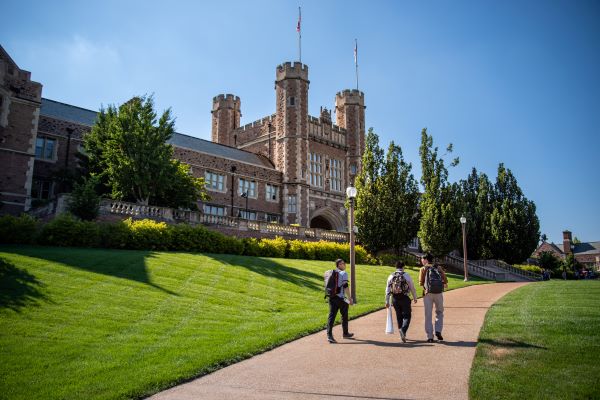
Washington University in St. Louis

SAN FRANCISCO, CA – The Greater Missouri HERC is expanding to three more states and changing its name to reflect the new expansion. Renamed the South Midwest HERC, the region now includes Missouri, Kansas, Oklahoma, Arkansas, and southern Illinois. This expansion provides opportunities for membership growth, more regional and national member networking and collaborations, increased dual career support, additional thought-leadership opportunities, and more regional programming.

When launched in 2007, the regional HERC was a collaborative of member institutions working to address the many challenges and opportunities of academic recruitment and retention – challenges that remain pressing more than 15 years later.

The South Midwest HERC is composed of nearly 160 individuals from 19 member institutions representing a diverse group of public and private colleges and universities, as well as a medical school and research institute. Dr. Saint Rice, Jr., is the chair of the region’s advisory board.

“Growing our region is critical for HERC to reach and assist institutional efforts to reduce barriers and biases in the hiring process,” said Dr. Saint Rice, Jr., Assistant Dean in the Washington University Olin School of Business and Director of Faculty, Staff, and Community Engagement, Washington University in St. Louis. “A diverse higher education workforce enriches the educational experience and is essential for achieving success at all levels – from the institution and its employees to its students.

ABOUT THE HIGHER EDUCATION RECRUITMENT CONSORTIUM: The Higher Education Recruitment Consortium (HERC) is a nonprofit consortium committed to advancing diversity, equity, and inclusion in the higher education workforce. With over 700 colleges, universities, hospitals, research labs, government agencies, and related organizations, HERC works to ensure member institutions are sites of belonging, where all faculty and staff can thrive. HERC provides resources, networking, and outreach programs to attract, hire, and retain a diverse and qualified workforce.

CONTACT: Marcia Silva, Higher Education Recruitment Consortium, marcia@hercjobs.org, 650-417-3193

Filed Under: News

How to Own Your Career Gap with Confidence

May 5, 2023 by Marketing Director

If you’re job-searching and worried about how to explain a career gap, don’t fret. Find out how you can “own it” and explain your break from the workforce proactively and with confidence.

Let’s start with some good news: If there was ever an easier time to explain a break in your career, it’s gotta be now. Regardless of your reason, with so many people re-evaluating their professions and making changes (have you heard of the Great Resignation?), you’re not alone. And employers are less apt to view a career gap negatively if you can explain it with tenacity and give them reassurance that you’ll be there to stick around in your new role.

There have been a few surveys related to the impact of career gaps on hiring decisions, such as the LinkedIn poll referenced in this article which cites that 79% of hiring managers would hire a candidate with a career gap on their resume. There is hope!

Adjusting Your Framework: Be Proactive and Honest

To effectively explain your gap, it’s essential to come from a place of authenticity. You had good reasons for your break, and you have nothing to apologize for. With this framework, you’ll be ready to address the topic head-on vs. allowing your future employer to come up with their own conclusions.

Resume

Your resume is the first place your future employer will see the gap. Instead of leaving a span of years blank (and up for interpretation), own what you did for those years. Example:

From January 2022 to March 2023, I traveled through Spanish-speaking countries and emersed myself in the language. This had long been a goal of mine to achieve before 2025.

Depending on the reason behind your gap, you may be able to think of a fancy (or at least functional) title for your “job” during that time. My friend had a 7-year gap due to caring for her young kids. She gave herself the title of “Domestic CEO” and used bullets to list tasks that she performed related to her profession. She got the job.

A few tactical pointers:

  • If your gap is long (say 5+ years), consider changing your resume format to highlight your skills vs. line-listing work history by dates.
  • If your break away from the workforce was really long, make sure you’re up to date on the latest resume trends, and don’t accidentally date yourself.
  • For shorter career breaks, you can get rid of months on your resume and focus only on years of employment to buffer the gap.
  • For a career gap that was a long time ago (say 10+ years ago), simply take it off your resume and focus on your most recent positions.

Cover Letter

Your cover letter is a great place to tell your story and alleviate any concerns your future employer may have by highlighting all the skills you learned and strengthened during your time away. How did your professional time off make you know more of what you want to be? Due to your time off, how will you be an even better employee? Did you become an Excel pro or time-management wizard while serving as the schedule-master for your tweenagers? Perhaps you mastered project management and honed your team-building skills while organizing a memorial for a loved one. Did you take any online classes, such as LinkedIn Learning or Udemy courses? See? You didn’t stop learning! These are all things to highlight.

If your situation is more serious or personal, such as having to take time off for an illness, you can mention that and quickly shift to the soft skills you acquired that employers are interested in. For example, adaptability, communication, and problem-solving skills are all worth mentioning.

LinkedIn Profile

Another resource to consider leveraging is LinkedIn Career Breaks which allows you to proactively include your gap on your LinkedIn Profile, select a reason, and even include details about how you spent your time.

The Interview: Know and Practice Telling Your Career Gap Story

The interview portion of the application process is usually the most anxiety-ridden. But with practice, you’ll be ready when the questions come up, or better yet, you can bring up the topic before your interviewers ask. Remember you’re in charge of your story so keep the focus on your experience and how it relates to the role. Think through your situation and practice succinctly talking up the tidbits related to the position. If your gap was truly a break and not due to a compelling competing priority, think through how having the time away helped you grow. Did you volunteer? Did you have so much downtime that you were able to discover your true passion and gain clarity as to why you’re perfect for the position you’re applying for? All these experiences can be phrased to convey how your career break makes you a great hire.

Keep it short (this is not an invitation to overshare) and stay positive. If things get off-track always turn the conversation back to your relevant experience. To help you practice, tap into video resources like this one from Indeed, that show great examples of do’s and don’ts during the interview.

As you prepare for your new career adventure, don’t forget to take a step back and put yourself in the shoes of your interviewer or hiring manager. You’ll quickly recognize that they are asking about your career gap to rule out a bad hire. But you’re a good hire – so lose any negative language or fear and own it. Ensure your future employer that you’ll be here to stick around, and if you’re confident, they will be too.

Check out Top Articles on HERC Jobs.

Interested in higher ed job opportunities? Explore our job board with about 50,000 job postings and sign up for a free job seeker account.

About the Author: Sara Jane Todd is a marketing and communications professional with 20+ years of experience across various disciplines and industries. Sara’s biggest passion is developing clear, concise, compelling messaging and branding—ensuring a consistent voice across all marketing touchpoints. She believes that same philosophy applies to how you market yourself.

Filed Under: Career Advice, CV/Resume Advice, Interviewing, Job Search, Older Job Seekers, Top Articles, Women Tagged With: Sara Jane Todd

Shifting the Privilege Conversation to Empower Change

May 1, 2023 by Marketing Director

Two higher ed professionals having 'the talk' - a discussion about an important concern.

This article is from our partner, Career.Place.

“The talk.”

A phrase that usually evokes an immediate response. Often it brings up memories of that very awkward conversation with a parent or child about the ‘birds and the bees.’

“The Talk” is one of those “if you learn nothing from me, at least know this” moments where a parent conveys to their child a critical piece of information to keep them from making a dangerous, long-lasting, and, in some instances, fatal mistake.

After “The Talk”, we are a little wiser when entering and navigating the world.

But not all talks are the same. There are other topics that fall into “The Talk” depending on who you are. Here are a couple of examples.

“The Talk” extended edition

For women, “The Talk” also includes drink safety. Many girls are taught when at a social event, never accept a drink from a stranger, never let a drink out of their sight, and hold a cup with their hand over it to block anyone from slipping something into it. Why? To avoid the danger of being drugged and all that happens after.

Does this mean all men at parties have a nefarious purpose? Absolutely not. But are there those that prey on women? Absolutely. And so, “The Talk” includes this critical wisdom to protect against those few.

For black men, “the talk” also includes law-enforcement safety. Many black boys are taught that if they have a run-in with a law-enforcement officer that they must always keep both hands visible, they must always obey what is said, and never talk back or be disrespectful in any way. Why? To avoid the danger of aggressive behaviors and all that happens after.

Does this mean all law-enforcement officers have nefarious purpose? Absolutely not. But are there those that are aggressive and dangerous? Absolutely. And so, “The Talk” includes this critical wisdom to protect against those few.

The talk comes in many sizes with many topics. Which topics are covered and how many or how few is privilege.

Privilege is the length of The Talk

In this time of standing up for social injustice, the topic of “privilege” has taken center stage. There are many flavors of privilege – race privilege, socio-economic privilege, gender privilege, etc. But, at their core, one of the most fundamental attributes of privilege is how the world treats us based on who we are. We may all be entering the same room or party or street, but we are not all treated the same way. And the amount of advice our parents give us to navigate that room or party or street is evidence of that inequity.

The question is not “does privilege exist?” (it does). The question is what can we do about those inequities?

The answer: Awareness – Discussion – Action

1. Increase awareness

Part of the challenge of privilege is how unaware many of us are if we are not part of the impacted group. How many men are aware of drink safety? How many non-black males are aware of law-enforcement safety?

Imagine what would happen if we expanded the audience of “The Talk”.

For example, rather than just teaching girls about drink safety, we told everyone about drink safety and why it’s so important for women.

Expanding the conversation (the what, the why, and the so what) to include everyone enables awareness and understanding of the challenge. It opens the door for more productive and informed conversation.

Which brings us to:

2. Promote conversation of solution

Awareness is only the first step. Just because we know a problem is happening doesn’t make the problem go away, and it doesn’t make everyone an ally in the goal of removing the problem. That takes deliberate effort.

In our example of drink safety, imagine now that everyone is aware of the problems that drives drink safety (independent of gender) and are invited into a conversation about what to do about it. How can we, as a community across genders, address the problem? Ideas start flowing, such as training people to notice unattended drinks and speak up should they see suspicious activity.

With ideas there are next steps and community buy-in. Which brings us to:

3. Define and take action

Awareness enables conversation which enables ideas for solutions. But ideas remain powerless without action. Turning ideas into actions that are clear, obtainable, and supported can change the world.

In our drink safety example, imagine that all the ideas are discussed and debated, and a few are selected first. The community commits to a ‘drink awareness’ program where every individual looks for unattended drinks once an hour and removes any they see. Soon, the action of removing unattended drinks becomes habitual and it grows difficult to find an unattended drink, let alone do anything to it.

Bringing it all together

Privilege is very real and very impactful, but it doesn’t mean we are condemned to forever live under its shadow. Taking the approach of awareness, discussion, and action shifts the conversation from the challenge of privilege, to empowering solution. While a challenge impacts some, we can all become part of the solution and change the world.

Check out Top Articles on HERC Jobs.

This content was published with permission from Career.Place.

Filed Under: Leadership

Find it Fast

Join HERC
HERConnect (Member Login)
  • Partners
  • About Us
  • Newsroom
  • Contact Us

Regional HERCS

  • Carolinas
  • Greater Chicago Midwest
  • Metro New York & Southern Connecticut
  • Michigan – Ohio – Western Pennsylvania – West Virginia
  • Mid -Atlantic
  • Midwest
  • Mountain West
  • New England
  • New Jersey – Eastern Pennsylvania – Delaware
  • Northern California
  • Northwest
  • Southeast
  • South Midwest
  • Southern California
  • Upstate New York
© 2000 – 2025 The Higher Education Recruitment Consortium is a project of the Tides Center, a 501(c)3 non-profit organization.
Tides’ State Nonprofit Disclosures
Sitemap | Terms | Privacy Policy
Powered by WSI Digital
Cookie settingsAccept Cookies
We use cookies so that we can remember you and understand how you use our site. If you do not agree with our use of cookies, please change the current settings found in our Cookie Policy . Otherwise, you agree to the use of the cookies as they are currently set....
Privacy & Cookies Policy

Privacy Overview

This website uses cookies to improve your experience while you navigate through the website. Out of these cookies, the cookies that are categorized as necessary are stored on your browser as they are essential for the working of basic functionalities of the website. We also use third-party cookies that help us analyze and understand how you use this website. These cookies will be stored in your browser only with your consent. You also have the option to opt-out of these cookies. But opting out of some of these cookies may have an effect on your browsing experience.
Necessary
Always Enabled
Necessary cookies are absolutely essential for the website to function properly. This category only includes cookies that ensures basic functionalities and security features of the website. These cookies do not store any personal information.
Non-necessary
Any cookies that may not be particularly necessary for the website to function and is used specifically to collect user personal data via analytics, ads, other embedded contents are termed as non-necessary cookies. It is mandatory to procure user consent prior to running these cookies on your website.
SAVE & ACCEPT